Seasons in the Queue: The Allotment List Is Britain’s Slowest Status Symbol
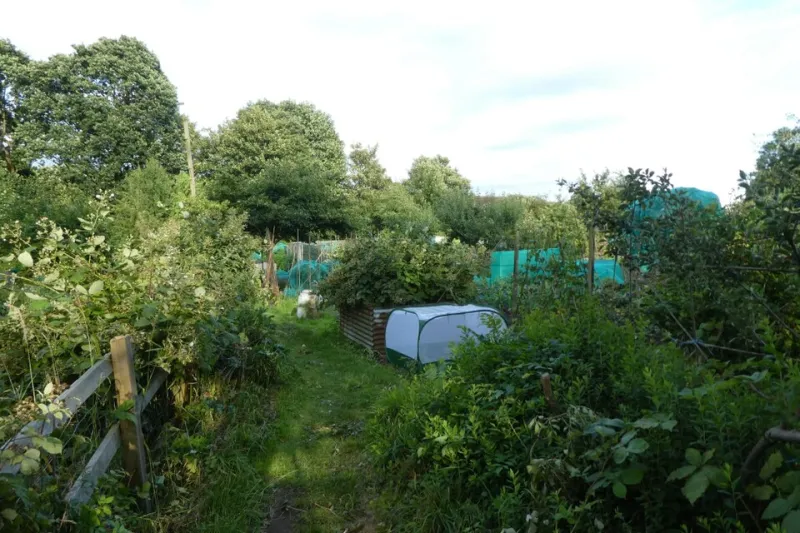
Photo: DS Pugh , CC BY-SA 2.0, via Wikimedia Commons
Every British queue has a tell. The one at the post office says the state has run out of counter space. The one at the airport says we have run out of patience. The allotment waiting list says something more uncomfortable: we have run out of land, and we are pretending that is a lifestyle choice.
In 2026, a plot of council-owned soil can be harder to secure than a decent table on a Saturday night. Waiting lists in some places run to five, eight, ten years. Some councils have quietly closed their lists altogether, which is bureaucracy’s way of saying the queue is now so long it has become a monument. And yet the demand keeps coming, fed by seed catalogues, Instagram harvests and a very British belief that happiness is a shed with a padlock.
The queue that doesn’t take Apple Pay
What makes the allotment list interesting is not that it is long. Plenty of things are long. What makes it interesting is that it is one of the few queues left in Britain where you cannot simply buy your way to the front. You can hire a gardener. You can subscribe to a veg box. You can fill a balcony with pots and call it a smallholding. But you cannot, generally, wave a debit card at the parish council and jump the line for a proper plot with a water butt and a neighbour who complains about your bindweed.
That is oddly refreshing. In a country where money usually finds a shortcut, the allotment queue asks you to wait. It measures your commitment in winters, not salary bands. It does not care what car you drive, unless you drive it across someone’s onion bed. The rules are boring, local and stubbornly procedural: residency, fees, sometimes a reference from the site secretary, always the sense that someone with a clipboard has the final say.
But do not mistake procedure for fairness. The queue is honest about scarcity, not about class. It still helps to know the list exists, to have the time to chase it, and to have a council that has not sold the land to a developer with a nice rendering of a courtyard garden. The allotment waiting list is a mirror, but it is a slightly smudged one.
From ration book to raised bed
The allotment was not always a lifestyle accessory. It was a necessity with a spade. The post-war years gave us plots as a practical answer to hunger and rationing, and the Dig for Victory spirit lingered long after the last emergency. For decades, allotments were associated with older men, bitter tea and a certain kind of quiet. They were useful. They were not cool.
Then something shifted. Farmers’ markets, food miles, sourdough, the great middle-class romance with provenance. The allotment became a place to prove that you knew where a carrot came from, ideally because you had pulled it up yourself while wearing a sensible jumper. Television chefs and wellness culture did the rest. The plot stopped being a public service and started being a personality trait.
That is not entirely bad. More people growing food is a decent thing. Children who think potatoes are born in plastic bags could do worse than meet a real one. The problem is that the lifestyle version of allotments has arrived at exactly the moment the land is under maximum pressure. We have made the plot desirable at the same time as we have made it scarce.
The council, the developer and the compost heap
Councils are caught in the middle, which is their natural habitat. Allotment sites are often prime development land wearing a fleece. A field of sheds and cold frames can look, to a certain kind of accountant, like an underperforming asset. Meanwhile, the same council is under pressure to build homes, protect green space and keep the parks from turning into mud. The allotment sits in the middle of all three arguments, usually with a wonky gate.
Developers have learned the language of the age. They will promise a community garden, a wildflower strip and maybe a bee hotel. What they rarely promise is a ten-year waiting list for a proper plot with a tap. New housing is often built with token green space, and the allotment becomes a problem to be managed rather than a public good to be provided. Some councils have started asking developers for contributions, but a Section 106 agreement is not the same as a field of compost.
The result is a queue that exposes the gap between what Britain says it values and what it actually allocates. We like the idea of growing our own. We like the photograph of the runner beans. We are less keen on the boring bit: finding land, funding water, managing sites and ensuring that the list is open to people who are not already in the know. The waiting list becomes a polite way of not solving the problem.
A status symbol measured in winters
There is a class story here, but it is not the one usually told. The old joke is that allotments are for people who want to save money. The new reality is that they are also for people who want to display a certain kind of virtue: patience, ecological awareness, the ability to make chutney without irony. The plot is a status symbol, but a strange one, because the status is mostly visible to other people who want a plot.
And that is why the queue feels honest. It is not a salary ladder. It is a waiting game. You cannot hurry the seasons. You cannot blag your way to a harvest. The list measures class anxiety in a different currency: how long can you afford to wait, and who told you to put your name down in the first place? The answer is often: someone with a spare afternoon and a good grasp of council procedure.
That does not make the list fair. It makes it revealing. A country that cannot provide enough allotments is a country that has decided land is for the highest bidder, not the most patient resident. A country that keeps the lists open, however slowly, is at least trying to keep the door ajar. The allotment queue is not a solution to Britain’s class problem. It is a very slow, very British way of admitting that we have one.
So next time you see a plot holder leaning on a fork, looking smugly at a row of kale, remember what is really on display. It is not just vegetables. It is a place in a queue that most of us will never reach. In 2026, that is about as honest as British leisure gets.