The Tap Room Without the Taps: Britain's Sober Pub Experiment
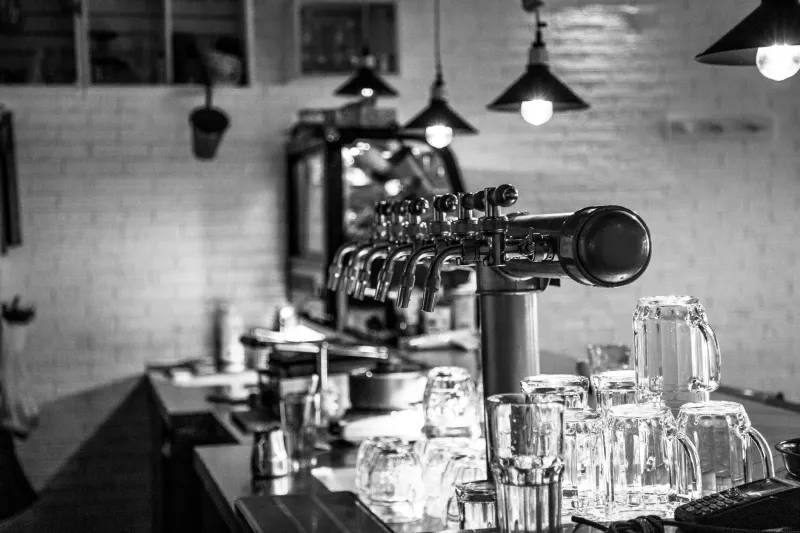
There is a pub I know in a town that doesn't need another pub. On a Friday at seven, the bar has four hand pumps, two of them off, and a row of alcohol-free taps that are all working. The coffee machine outranks the till for floor space. There is a shelf of board games with a laminated sign asking you to count the pieces back in. Nobody has been asked to leave since 2019.
Ten years ago, this would have read as a eulogy. Now it reads as a business plan.
The maths of a dry round
Beer volumes have been sliding for two decades, and the pubs that relied on them — wet-led, standing-room, no kitchen to speak of — have been the ones most likely to end up as flats with a heritage plaque. Running a pub is a low-margin, high-overhead, weather-exposed business at the best of times. Then came energy bills, then came the wage floor, then came a generation that thinks nothing of spending £12 on a cocktail and nothing at all on a Tuesday.
The no- and low-alcohol category, meanwhile, is the one bit of the drinks trade that behaves as if it's still growing. Brewers who spent years treating 0.5% as an embarrassing cousin now put their best marketing behind it. Supermarkets give it a bay. And pubs, which used to stock one dusty bottle of alcohol-free lager for the one person in the round who had drawn the short straw, are installing taps.
Why? Because the margin on a pint of 0.0% is respectable, the customer is sober enough to have a second one, and — crucially — that customer is now willing to be in a pub at all. For years, the sober friend was the one who came out for an hour, drank a lime and soda, and left before the conversation got interesting. Now they stay. They order food. They book the back room for a quiz.
The etiquette problem nobody has solved
What the trade hasn't fixed is the social plumbing. The round is a beautiful system built on an assumption: everyone is drinking roughly the same thing at roughly the same speed. Break that and small awkwardnesses multiply. Does a £2.40 lime and soda count in the round? Who buys the fifth round when two people have switched to coffee? Why does ordering a 0.0% make you feel obliged to explain yourself, as if you've been caught in the act of self-improvement?
Sobriety still arrives in Britain carrying a faint whiff of the moral. We are a country that can be relaxed about a four-pint lunch but gets visibly nervous about someone who has never had a drink at all. The pub, at its best, was the one room where nobody asked what you did for a living or why you were there. It was also the one room where you got asked, endlessly, why you weren't drinking.
That's changing, but it's changing generationally, and the awkwardness hasn't gone. The good publicans are the ones managing the etiquette as carefully as they manage the cellar: run clubs that finish at the pub, quizzes where the prize is a bar tab nobody has to spend on booze, a decent coffee, actual food, and no lingering sense that the real night is happening somewhere else.
What the bar was actually for
Here's the uncomfortable bit. The pub's licence wasn't just a licence to sell alcohol. It was a licence to be idle in public. To sit for three hours without a purpose. To let the evening blur and the guard come down. To have the argument about the offside rule that only gets made at 11pm, and to wake up the next morning slightly embarrassed but mostly fine.
Take the alcohol out and you don't automatically lose that — but you do have to replace it with something. A coffee shop runs on turnover: you can sit, but only for a bit, and there's a limit to how long a £3.80 flat white can reasonably buy you a table. A pub runs on time, absorbed slowly, paid for by the pint and by the fact that nobody's counting.
That is the deal the sober pub has to renegotiate. And the answer, increasingly, is membership in the loose sense: the darts team, the book club, the Sunday quiz, the six people who always sit on the left. The pub stops selling drinks and starts selling a standing arrangement to be somewhere with people who know your name. It's the same thing it always sold, honestly. It's just that the drinks used to do the heavy lifting.
Belonging is a product now
The risk is that this becomes a café with dark wood and a horse brass. The room fills, the takings work, and something faintly precious drains out of it. Real pubs are supposed to be a little bit out of control, and a room that has been engineered to be safe for everyone can end up comfortable for no one.
But the opposite risk is worse: the pub that insists on the old terms and closes. We've had about a quarter of them go since the turn of the century, and the ones that survived by making themselves useful — food, coffee, events, a room you can borrow — are the ones still there.
So the question isn't really whether the pub can survive without the booze. It's whether the good ones can keep the thing that booze was standing in for. The easy conversation with a stranger. The slow hour. The permission to sit down. All of it survives a 0.0% pint perfectly well. It just doesn't happen automatically. And a room where nobody has to be drunk to stay until eleven is, on balance, a room with more in it, not less.