Pennies, Plastic and Pure Luck: Why the Seaside Arcade Still Feels Fair
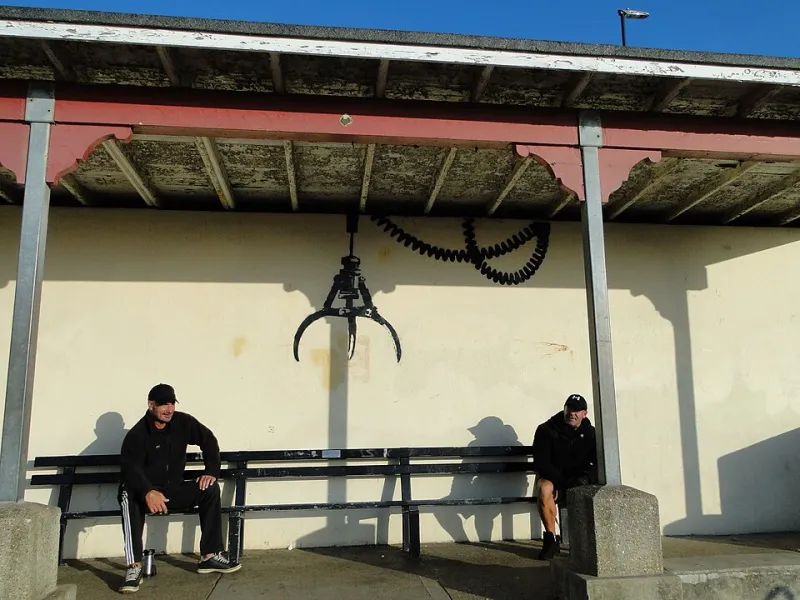
Photo: Adrian S Pye , CC BY-SA 2.0, via Wikimedia Commons
It is raining on the promenade. The sea is the colour of wet slate. The arcade, by contrast, is all noise and light: a fruit machine playing a jingle from 1998, a child hammering a ticket dispenser, and the soft, endless clatter of coins falling on to coins.
The 2p machine is the last honest casino in Britain. Not because it is generous, or fair, or good for you. It is none of those things. It is honest because it does not pretend. The house edge is written in gravity. You can see the plastic pusher. You can see the ledge. You can see the coins you are about to lose.
In a country that has spent years arguing about gambling reform, the penny fall is a strange little relic. It sits at the edge of the debate: too small to panic about, too familiar to ignore. And it tells us something about the British idea of risk — that a gamble is acceptable if it is cheap, visible, and shared with someone holding a bag of chips.
The theatre of the near miss
The 2p machine is a simple machine with a cruel imagination. You drop a coin. It lands. It nudges another coin. That coin nudges a third. For a second, the whole shelf looks ready to collapse in your favour. Then it stops. You drop another 2p.
The near miss is the whole point. The machine is designed to make the cascade feel imminent. It is a lesson in probability disguised as a seaside treat. But unlike an online slot, you can see the mechanism. There is no algorithm hiding in a server farm. There is a plastic pusher and a pile of copper. The disappointment is physical.
The grabber is the same story with a different punchline. The claw descends, opens, closes, and fails to grip the toy you wanted. Everyone watching knows the claw is weak. Everyone watching also knows that someone, somewhere, once won a giant teddy. That is the deal. You are not buying a teddy. You are buying the story of the claw.
Why it survives the gambling wars
Britain has become much more serious about gambling. The Gambling Commission talks about harm. Campaigners talk about addiction. The media talks about online casinos that fit in your pocket and never close. In that conversation, the seaside arcade can look like a harmless postcard from another era.
It is not entirely harmless. Prize machines and arcades are regulated for a reason. Children play them. Adults spend more than they planned. The low stakes are a safeguard, not a solution. But there is a difference between a machine that takes 2p and a machine that takes your rent. The scale matters. The ritual matters. The fact that you have to stand in a room with other people matters.
In a media landscape that often frames gambling as either a public health emergency or a matter of personal freedom, the arcade offers a third thing: a cheap afternoon. It is not a moral instruction. It is a room full of small, visible risks, with a ticket booth at the end that gives you a plastic spider.
A good day out, not a financial plan
Seaside arcades survive because they are part of the British day out. Blackpool, Brighton, Southend, Weston-super-Mare, Skegness — the names change, the carpet is the same. You go for the pier, the chips, the wind, the novelty. The arcade is where you spend a fiver and come out with a keyring.
The stakes are low enough that losing is part of the entertainment. That is a surprisingly rare thing. In most gambling, losing is the point you are trying to avoid. In the arcade, losing is the weather. You do not remortgage a house for a coin pusher. You do not chase your losses at 3am on a phone. You run out of 2p coins and go and get an ice cream.
That is not a defence of the industry. It is an observation about proportion. The 2p machine has a natural limit: your pockets get heavy, then light. The online casino has no such limit. That is why the arcade feels quaint and the phone feels dangerous. One has a door. The other follows you home.
The honesty of a visible con
All gambling is a magic trick. The arcade just does not hide the trapdoor. You can see the coins you lose. You can see the mechanism that takes them. You can see the other people playing, which means you can see their disappointment too.
That visibility is worth something. It teaches children — and adults — that luck is a story with a beginning, middle and end. You put money in. You get a thrill. You get less money back. The machine does not care. The sea does not care. The arcade does not care. But at least it is all out in the open.
The 2p machine is not a solution to anything. It is a Saturday. It is a small, silly, social gamble in a country that has forgotten how to do small. Britain is right to reform gambling. But before we bulldoze the arcade, we should notice what it gets right: low stakes, clear limits, and the knowledge that the house always wins — but at least the house is in the room.