Britain’s AI Slop Panic Is a Sequel, Not a Plot Twist
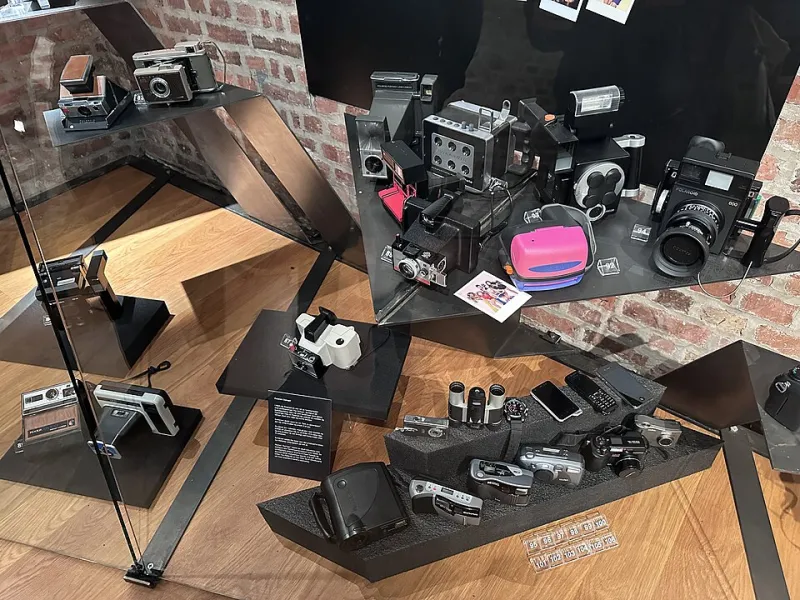
Photo: Wolfmann, CC BY-SA 4.0, via Wikimedia Commons
Start with a box. In 1888, George Eastman put a camera in a leather-covered wooden case, gave it a name that was easy to say and hard to forget, and told the world: 'You press the button, we do the rest.' The Kodak No.1 was not the first camera. It was the first camera designed for people who had no intention of becoming photographers. That was the point. And that was the problem.
Within a few years, newspapers were fretting about 'Kodak fiends'—snap-happy amateurs cluttering the world with mediocre pictures. Professional photographers worried about their trade. Critics worried about taste. Moralists worried about privacy and propriety. The complaint was not that the camera was bad. The complaint was that too many people had one.
Fast-forward to 2026 and Britain is having the same argument, just with better graphics. Generative AI can now produce images, copy, music and video at the touch of a prompt. The phrase 'AI slop' has become shorthand for the grey, glitchy, strangely soulless stuff cluttering our feeds. Creative industries are worried. Publishers are worried. Teachers are worried. And a familiar question is back on the table: what happens when the tools of creation stop being scarce?
The first flood of buttons
The 1888 panic was not really about cameras. It was about gatekeeping. Photography had been a craft with a priesthood—people who knew about plates, exposure and chemistry. The box camera turned that priesthood into a hobby. Anyone could take a picture. Most of those pictures were bad. Some were brilliant. The world did not end. It got a lot more visual, and new kinds of judgment grew up around the flood: picture desks, photo agencies, curators, editors, archivists.
The same pattern is visible now. AI has not created the first flood of cheap content. It has accelerated a flood that was already underway. The difference is speed, scale and provenance. A bad Victorian snapshot could be ignored in a drawer. A bad AI-generated image can be shared a million times before lunch. A synthetic voice can imitate a broadcaster. A fake photograph can move markets or start fights. That is genuinely new, and it deserves serious rules.
But the moral panic is not new. The language is almost identical: amateurs will ruin culture, the market will be swamped, real creators will be squeezed out. The anxiety is real, but it is not a prediction. It is a rerun.
Same panic, faster pipeline
Britain’s AI debate in 2026 often slides into two camps. One says the technology is a democratising wonder and anyone who worries is a snob. The other says it is a cultural plague and anyone who uses it is a fraud. Both are lazy.
The democratising argument is partly true. AI tools can help a disabled artist sketch an idea, a cash-strapped theatre company mock up a poster, a local historian restore a damaged image. Lowering the cost of making things is not automatically bad. The history of culture is full of technologies that put tools in more hands: cheap printing, affordable cameras, home recording, desktop publishing, smartphones.
The plague argument is also partly true. AI can be used to churn out books, articles, songs and images at a volume no human editor can humanely handle. It can scrape work without consent. It can blur the line between a real photograph and a fabricated one. It can make it harder to trust anything. Those are not small problems.
But here is the part both camps tend to miss: the crisis is not the tool. It is the collapse of editorial judgment.
The gatekeepers were already gone
For years before generative AI became a pub conversation, British media and culture were hollowing out the institutions that used to sort the good from the bad. Local newspapers lost reporters and subeditors. Picture desks shrank. Fact-checking became a luxury. Broadcasters cut back on specialist arts coverage. Publishers chased scale. Social platforms replaced editors with recommendation engines that reward whatever keeps a thumb moving.
The machines did not kill taste. They arrived after the taste-making infrastructure had been badly weakened. AI slop is not filling a vacuum because the vacuum was never empty. It is filling a vacuum because the people paid to care about quality were already being pushed out of the room.
That is why the 'who gets to call themselves a creator' argument feels so raw. The old gatekeepers were not neutral. They excluded plenty of working-class writers, regional voices, photographers who did not go to the right school, musicians who could not afford to tour for free. Restoring the old velvet rope is not the answer. But pretending that no rope at all is a meritocracy is nonsense. A world with no editorial judgment is not a creative utopia. It is a firehose with a paywall.
What a serious 2026 argument looks like
Britain could be arguing about the things that actually shape the flood. Transparency rules for synthetic media. Clear labelling that travels with an image or a voice. Licensing deals that pay creators whose work trains the models. Public funding for local reporting, criticism and curation. Media literacy that teaches people how to spot provenance, not just how to spot a bad Photoshop job.
None of that requires banning the tools or pretending the past was better. It requires treating editorial judgment as a public good rather than a cost line. It means funding the people who ask awkward questions: does this image exist? Who made it? Who benefits from it? Is it any good? Those questions are not snobbery. They are the difference between a culture and a content farm.
In 1888, the box camera did not destroy photography. It changed who could take a picture, and it forced the world to build new ways of deciding which pictures mattered. In 2026, generative AI is doing something similar, only faster and with more lawyers. The real crisis is not that everyone can make things. It is that fewer people are being paid to tell us what is worth keeping.