The Third Place Is Britain’s Most Expensive Comfort Blanket
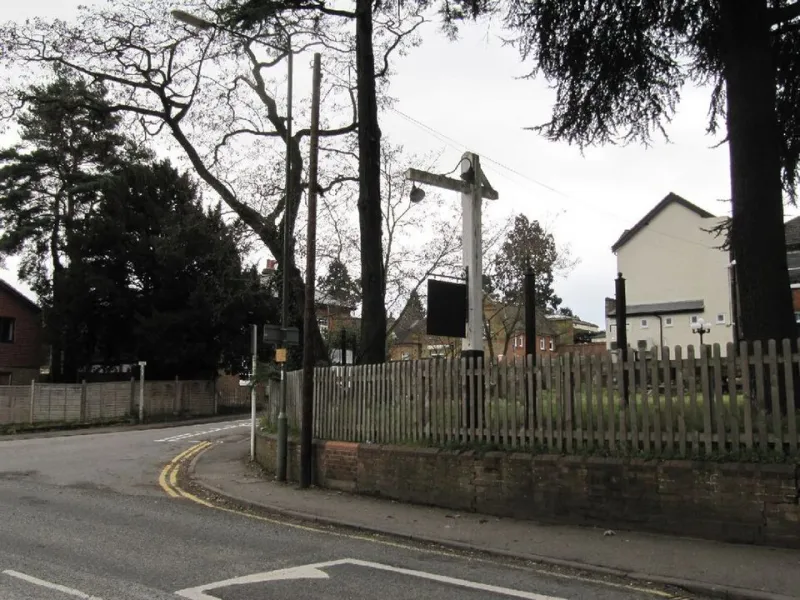
Photo: Bill Nicholls , CC BY-SA 2.0, via Wikimedia Commons
Britain loves a third place the way it loves a farmers’ market: passionately, in theory, and usually with a queue and a card reader. The idea is simple, and sociologist Ray Oldenburg gave it a name back in 1989. A third place is not home, and it is not work. It is the pub, the café, the library, the barber’s, the community hall, the park bench with a regular cast of characters. It is where you can turn up alone and not be odd. Where you can stay without buying another thing. Where the only price of entry is showing up.
That is the theory. The 2026 version is different. The term has escaped sociology and become a marketing brief. Every new development has a ‘community hub’. Every café claims to be a living room. Every pub says it is the heart of the village. Meanwhile, the actual places where people gather without spending £6.50 are closing, merging or being turned into something with a QR code and a small-plates menu.
The word is doing a lot of work
‘Third place’ is a lovely phrase because it sounds like a public good while functioning as a premium product. It lets a chain sell you a flat white and a sense of belonging in the same transaction. It lets a developer put a co-working lobby in a block of flats and call it community. It lets a pub company talk about heritage while charging London prices in a town that has not seen London wages since the last time someone mentioned levelling up.
None of this is evil. It is just business. The problem is that we have started to believe the language. We talk about third places as if they are infrastructure, but we fund them like hobbies. We expect cafés to do the work of public squares, pubs to do the work of social services, and libraries to do the work of everything while their budgets are trimmed. Then we act surprised when the whole thing feels a bit transactional.
Belonging, but make it bookable
The modern third place is often a venue. You book a table. You order at the counter. You are politely reminded that laptops are not allowed after noon. The chairs are designed for a forty-minute stay, not a three-hour one. The lighting is excellent for photographs and terrible for reading. The exposed brick says ‘authentic’. The minimum spend says ‘keep moving’.
That is not a community space. It is a content backdrop with oat milk. And it is not fair to blame the barista or the independent owner, who is usually working eighteen-hour days to pay rent. The economics are brutal. Rents are high, rates are high, staff costs are high. A café cannot afford to be a public living room if the public living room does not buy enough cinnamon buns. The third place has been squeezed into a business model that cannot carry it.
The pub garden is not a public square
The pub is Britain’s favourite example of a third place, which is ironic, because the pub is also Britain’s favourite example of a business under pressure. The closure figures are grim, the tied-house system is grim, and the price of a pint in 2026 can make a round feel like a small mortgage. The pub garden is lovely. It is also often a branded outdoor space with a QR code, a booking system and a heater that only works if you spend enough.
That does not mean pubs are fake. It means we are asking them to be something they cannot always be. A pub can be a social anchor, but it cannot be a welfare state. A café can be a warm place to sit, but it cannot be a library. A library can be a lifeline, but it cannot survive on goodwill and photocopying. The myth is not that third places are good. The myth is that we are building them.
Who can afford to loiter?
The people who most need third places are often the least able to pay the cover charge. Young families, older people, freelancers, shift workers, anyone whose home is small or crowded or lonely. A £7 pint and a £6.50 coffee are not neutral prices. They decide who gets to linger and who has to keep walking. They decide who becomes a regular and who stays a customer.
In 2026, lingering has become a luxury good. We have turned belonging into a lifestyle category and then wondered why it feels so thin. The answer is not to romanticise the past. Some old third places were exclusionary, unwelcoming or plain unpleasant. The answer is to stop pretending that a branded lobby and a nice flat white can replace the messy, low-cost, slightly worn spaces where community actually happens.
If Britain wants third places, it has to treat them as infrastructure, not as a vibe. That means affordable halls, protected pubs, open libraries, parks that are safe and free, and spaces where the only price of entry is showing up. Until then, the third place will remain what it has become in 2026: a lovely phrase in a planning document and a very expensive place to sit.